
Rock ‘n’ roll; it’s the long-held modern corruptor of the innocent… and according to some, the potential soul-catching menace of the occult.






The Future Is Now
Rock ‘n’ roll; it’s the long-held modern corruptor of the innocent… and according to some, the potential soul-catching menace of the occult.
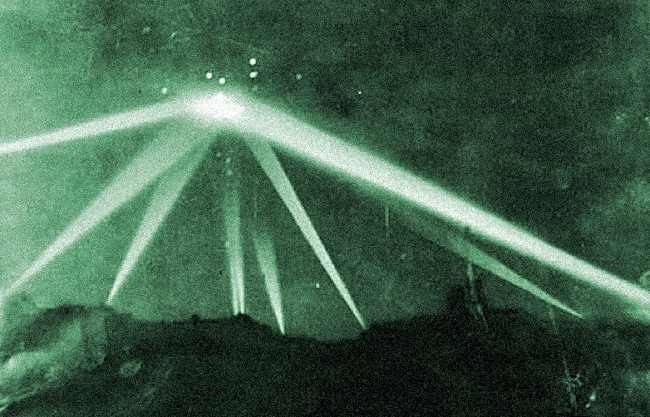
Sources around the web have long attributed “The Battle of Los Angeles” to a UFO, and some have gone so far as to assert it was butterfly-like… but how credible is this information?
The Linville Gorge Wilderness is one of the most enigmatic and beautiful landscapes anywhere in the southern United States. Decorated with steep and dangerous rock […] Read More
Throughout the Linville Gorge Wilderness, an expansive and well-preserved tract of rugged woodland between the cities of Linville and Morganton, North Carolina, stories detailing encounters […] Read More
Modern UFO research is, at times, rife with reports of alleged interactions with Men in Black (MIBs), the infamous and unsettling UFO-silencers that are purported […] Read More
Today is the long-awaited “end of the Mayan calendar”… and as we can see, the world has not ended. Well, it hasn’t ended yet, anyway. […] Read More
Upon first entering my home, many will find my selection of art rather strange, or even lacking a general theme or genre. Among the paintings […] Read More
Within various Medieval literature detailing history and folklore throughout Europe, one who looks hard enough won’t have to struggle to find references to hairy, manlike […] Read More
In the days since the tremendous 8.9 magnitude earthquake that rocked Japan late last week, mounting concerns over complications at Japan’s damaged Fukushima nuclear reactor […] Read More
What do the now somewhat infamous Betelgeuse star and 2012 doomsday prophecies have in common? Furthermore, what do each of these have to do with […] Read More
Over the last several months I’ve been pondering a particular phrase, which I’ve taken slightly out of context and used to describe shadowy, evasive characters […] Read More
The old familiar rhyme reads, “Jack be nimble, Jack be quick, Jack jumped over the candle stick.” Whether it be a wicked Jumpin’ Jack the […] Read More
It is often said in Fortean circles that the mysterious appearance of the Mothman, a winged cryptid monstrosity that appeared in the vicinity of Point […] Read More
Quoting Archbishop Desmond Tutu in this week’s edition of Time Magazine, apartheid’s fierce adversary and soon-to-be-retiring holy man commented that, “The texture of our universe […] Read More
As time goes on, people’s perceptions begin to change. Things that once held a certain fascination begin to lose their luster, and one will eventually […] Read More
Over at Mysterious Universe I recently blogged about a new book two of my favorite Forteans, Loren Coleman and Mark A. Hall, are working together […] Read More